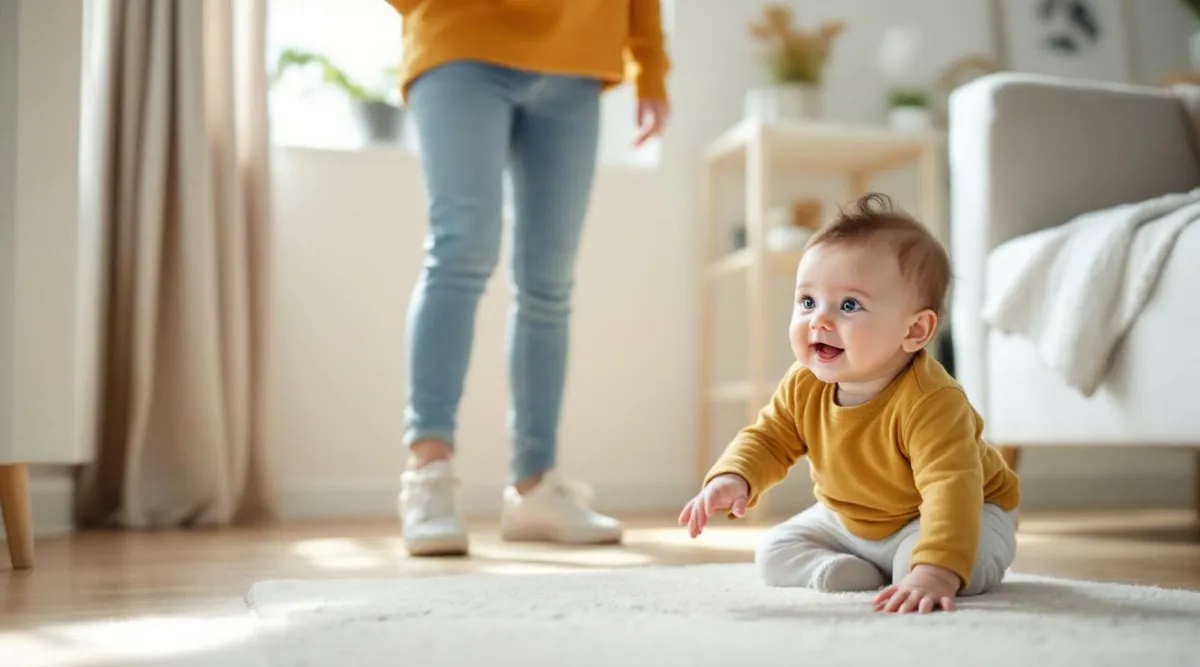
Separation Anxiety in Babies: What’s Normal?
If your once-easygoing baby suddenly cries when you leave the room, you might be wondering what changed.
Separation anxiety is a completely normal developmental stage — and in many ways, it’s a sign your baby is forming strong, healthy attachments.
Let’s walk through when it starts, how long it lasts, and what you can do to help your baby feel secure.
When Does Separation Anxiety Start?

Most babies begin showing signs between 6 and 8 months, though it can start a little earlier or later.
This shift happens because your baby now understands two important things:
- You exist even when they can’t see you (object permanence).
- You are their safe base.
So when you disappear? They protest.
This milestone often appears alongside other social developments outlined in our guide to social milestones by month.
What Separation Anxiety Looks Like
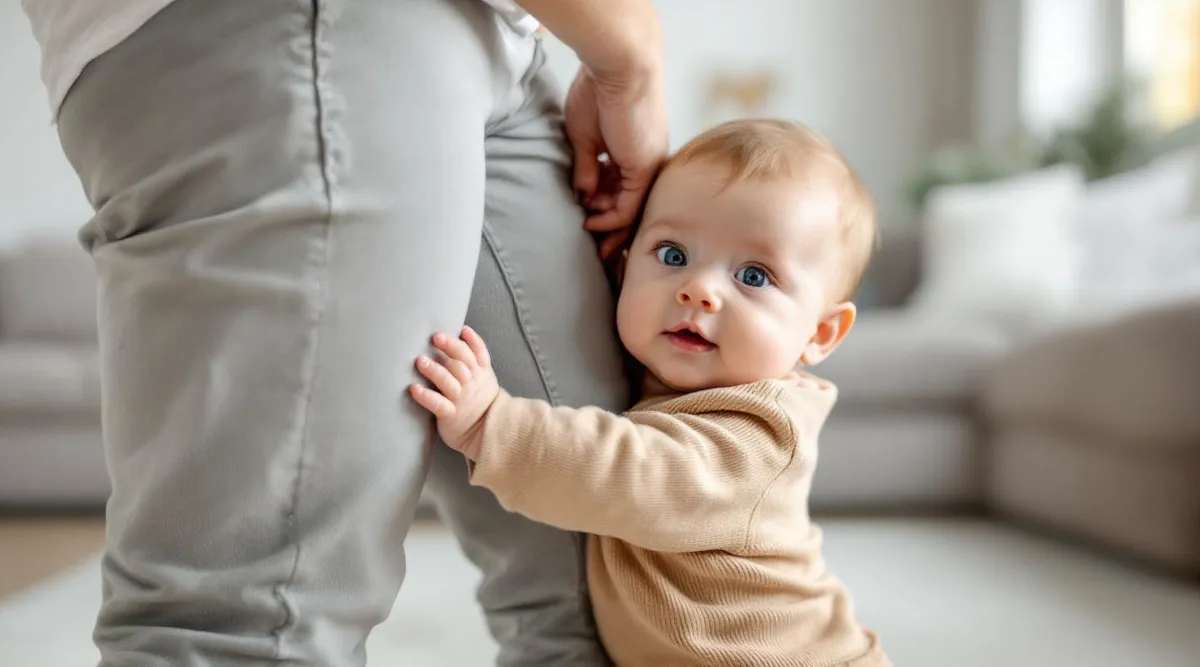
Every baby expresses it differently, but common signs include:
- Crying when you leave the room
- Clinginess
- Distress with new caregivers
- Waking more at night looking for you
- Hesitation around unfamiliar people
It can feel intense — especially if it seems to happen overnight.
The good news? It’s temporary.
How Long Does Separation Anxiety Last?
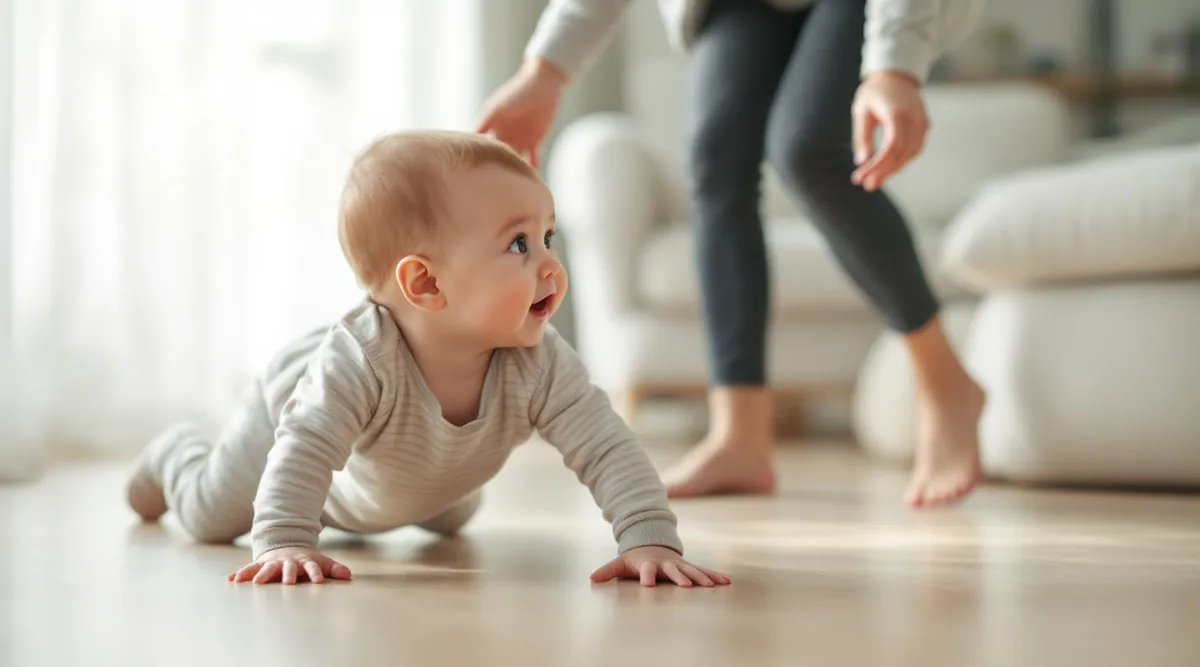
For many babies, peak separation anxiety happens between 8 and 10 months.
It often improves gradually through the toddler years as your child gains confidence and language skills.
Keep in mind: developmental leaps (like learning to crawl or walk) can temporarily make anxiety spike again.
If you’re tracking multiple changes at once, our baby milestones by month guide can help you see the bigger picture.
Gentle Ways to Support Your Baby
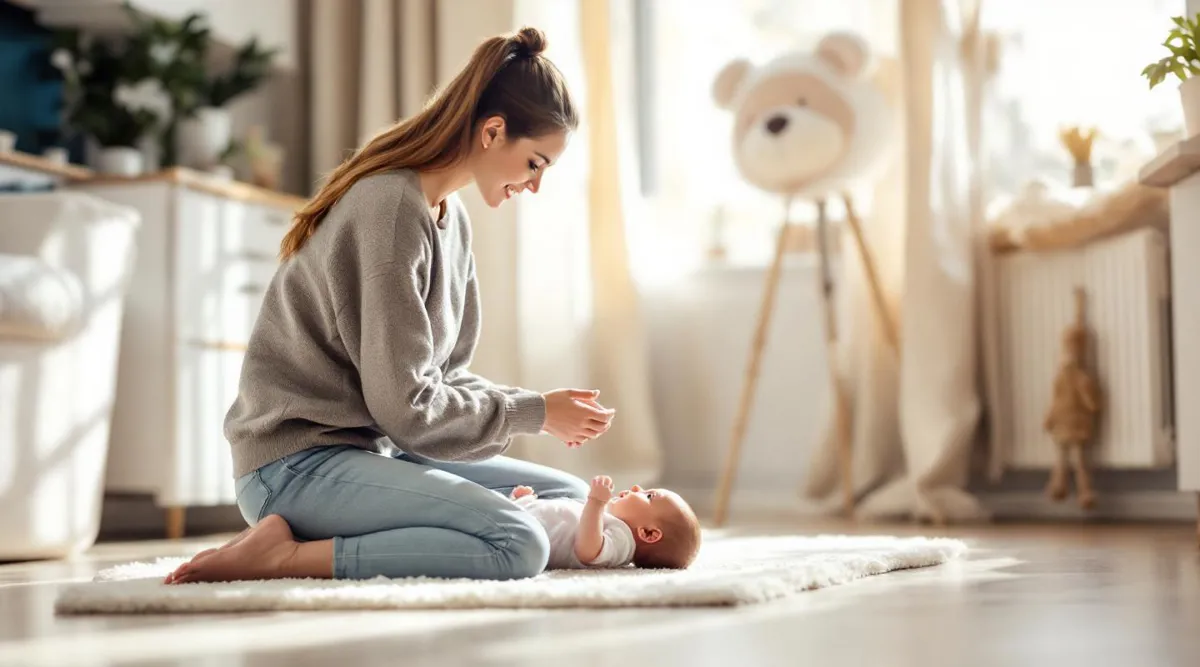
You don’t need to “fix” separation anxiety. Your job is to support your baby through it.
1. Practice Short Separations
Leave the room for 30–60 seconds and return with a calm, predictable routine.
2. Create Goodbye Rituals
A consistent phrase like “I’ll be right back” builds predictability.
3. Avoid Sneaking Away
It may seem easier in the moment, but predictable departures build trust.
4. Offer Comfort Objects
Around this age, some babies begin attaching to a small blanket or stuffed toy.
5. Stay Calm and Confident
Your baby reads your cues. Calm reassurance goes a long way.
When to Talk to Your Pediatrician
Separation anxiety is normal. However, reach out if you notice:
- Extreme, prolonged distress that doesn’t improve over time
- Loss of previously gained skills
- Significant feeding or sleep disruptions beyond typical regression patterns
Most of the time, what you’re seeing is healthy attachment in action.
You’re Not Creating “Bad Habits”
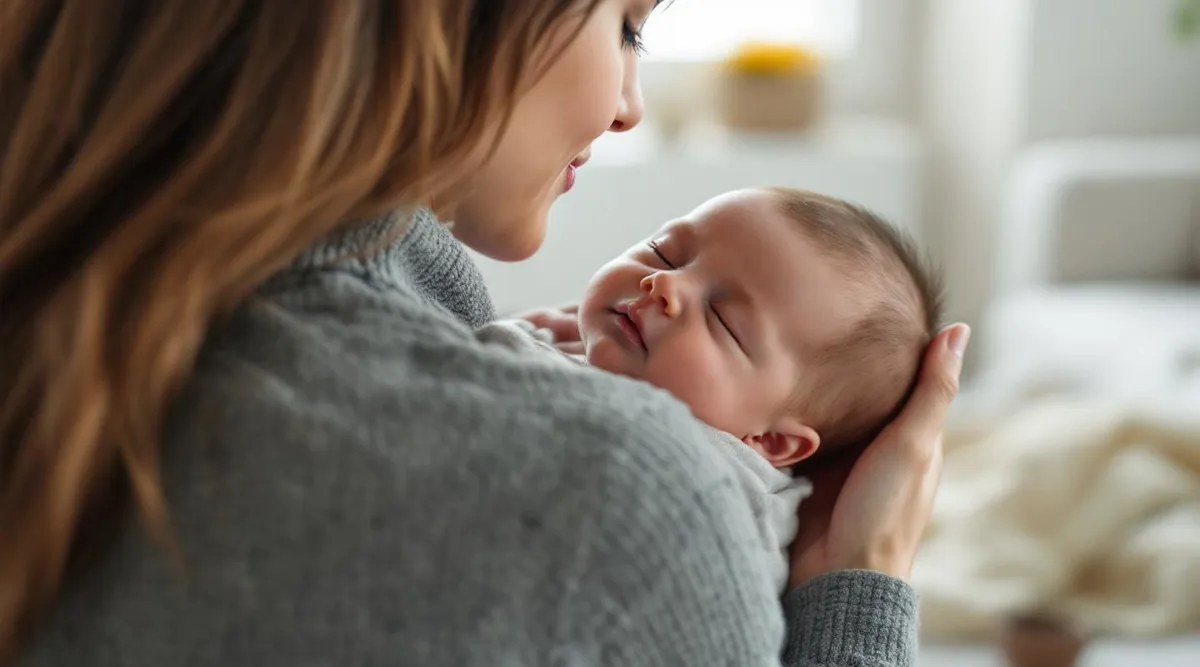
Responding to your baby’s distress does not spoil them. It builds trust.
Secure attachment in infancy lays the foundation for independence later.
This stage can feel exhausting — especially if it overlaps with sleep changes — but it’s a powerful sign your baby knows you are their safe place.
And if you’d like to track social and emotional changes alongside motor and language milestones, the NurtureWell app can help you see patterns and get personalized insights as your baby grows.