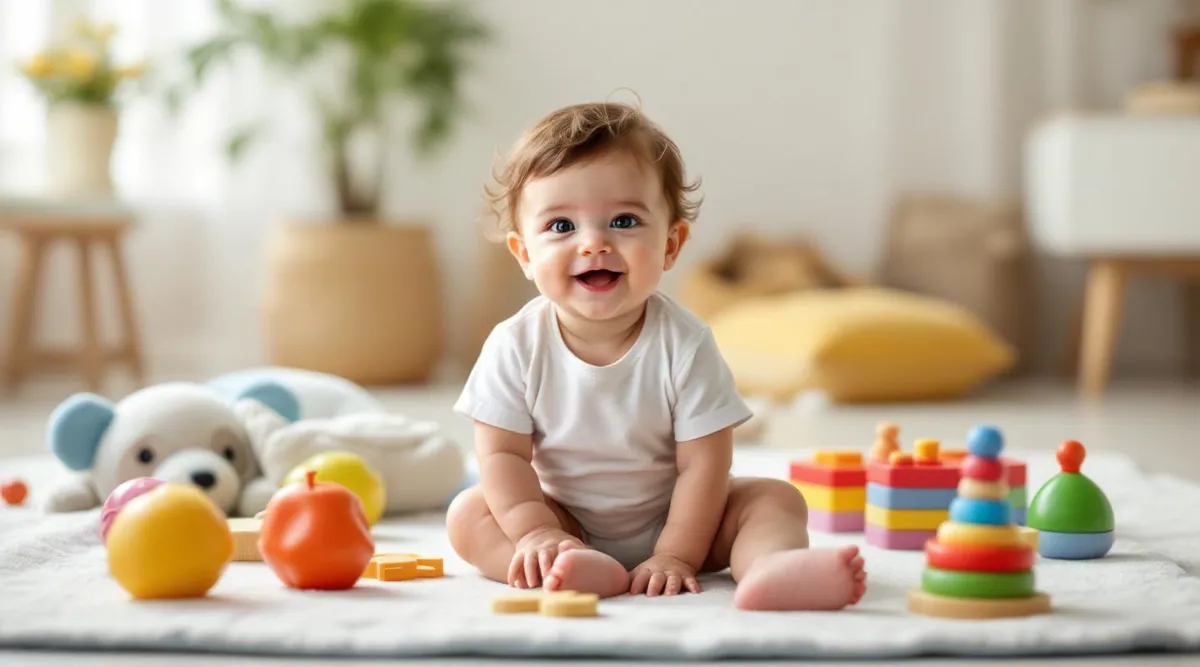
Baby Milestones by Month: Your Complete 0–12 Month Guide
Watching your baby grow during the first year is nothing short of amazing. One day they’re curling their tiny fingers around yours, and before you know it, they’re sitting, crawling, and maybe even taking their first steps.
This month-by-month guide walks you through common motor, social, language, and cognitive milestones from birth to 12 months. Remember: every baby develops at their own pace. Think of these milestones as gentle guideposts — not deadlines.
Newborn (0–1 Month)

In the first few weeks, your baby is adjusting to the world outside the womb.
Common milestones:
- Lifts head briefly during tummy time
- Turns toward sounds
- Focuses on faces at close range
- Makes reflexive movements (startle reflex)
This stage is all about bonding. Skin-to-skin contact, talking softly, and making eye contact help lay the foundation for social and emotional development.
2 Months

Your baby is becoming more alert and interactive.
Common milestones:
- Begins social smiling
- Coos and makes simple vowel sounds
- Holds head up for short periods
- Tracks objects with their eyes
This is a beautiful time to talk, sing, and smile often. Your baby is starting to respond to you intentionally.
3 Months

Strength and coordination are improving.
Common milestones:
- Pushes up on arms during tummy time
- Brings hands to mouth
- Recognizes familiar faces
- Enjoys play and may imitate facial expressions
Regular tummy time is key for building neck, shoulder, and core strength. If you need ideas, explore our guide to tummy time tips to make it fun and stress-free.
4 Months
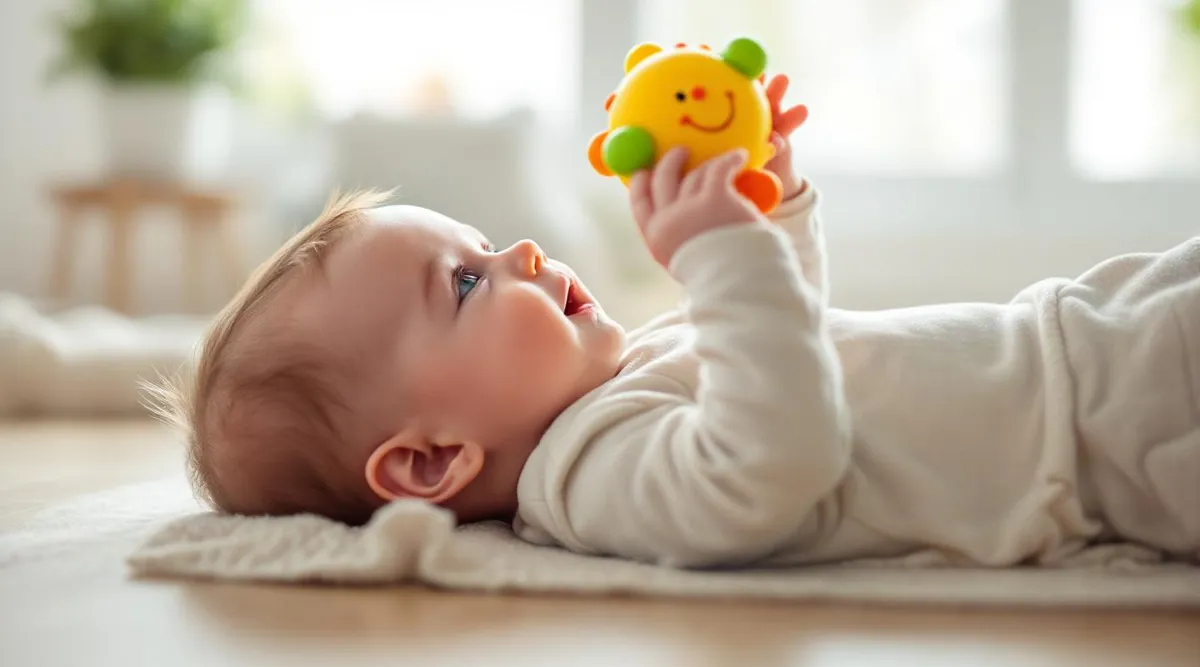
Your baby is becoming more social and physically stronger.
Common milestones:
- Rolls from tummy to back (some babies)
- Laughs and squeals
- Reaches for toys
- Holds head steady without support
Encourage reaching by placing toys just within sight during floor play.
5 Months

Curiosity is in full swing.
Common milestones:
- Rolls in both directions
- Explores objects with hands and mouth
- Responds to their name (sometimes)
- Shows excitement around caregivers
Floor time is more important than ever. Safe, open spaces help your baby practice movement skills.
6 Months

Halfway through the first year!
Common milestones:
- Sits with support (and sometimes independently)
- Babbles consonant sounds like “ba” or “da”
- Passes objects from one hand to another
- Recognizes familiar people
Many families begin solids around this time. Talk with your pediatrician about readiness signs.
7 Months

Your baby may be on the move soon.
Common milestones:
- Sits independently
- Begins scooting or early crawling movements
- Responds to their name consistently
- Enjoys interactive games like peekaboo
Interactive play strengthens both cognitive and social skills.
8 Months

Mobility increases confidence.
Common milestones:
- Crawls or army crawls
- Pulls to stand (some babies)
- Uses babbling to get attention
- Develops stranger awareness
Separation anxiety can begin around this age. Offer reassurance — this is a healthy social milestone.
9 Months

Communication is expanding.
Common milestones:
- Understands “no” (even if they don’t follow it!)
- Uses gestures like pointing or waving
- Cruises along furniture
- Explores cause-and-effect toys
Narrate your day. The more words your baby hears, the stronger their language foundation becomes.
10 Months

Problem-solving skills are blossoming.
Common milestones:
- Pulls to stand confidently
- Feeds themselves finger foods
- Imitates sounds
- Tests boundaries
Offer safe opportunities to explore different textures and objects.
11 Months

Independence is growing.
Common milestones:
- Cruises easily
- May stand alone briefly
- Says simple words like “mama” or “dada” with meaning
- Follows simple directions
Simple routines help your baby feel secure as they experiment with independence.
12 Months
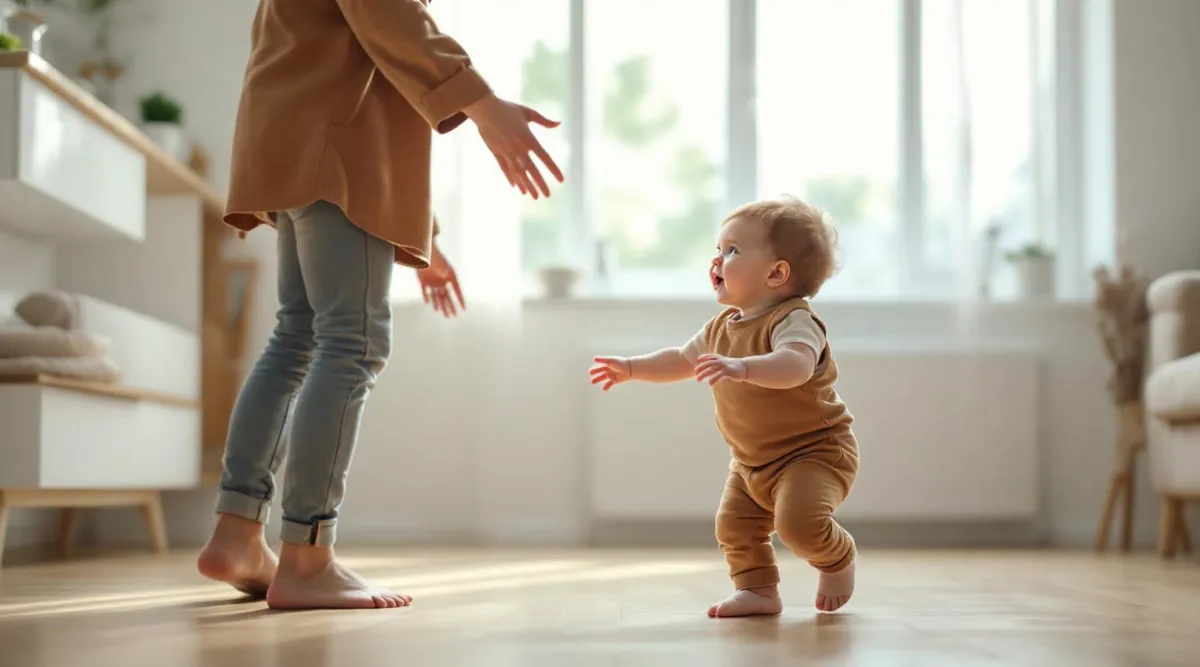
Your baby is officially a toddler!
Common milestones:
- May take first steps
- Uses simple gestures and words
- Explores objects in different ways
- Shows preferences for people and toys
First steps can happen anytime between 9 and 15 months — there’s a wide range of normal.
How to Support Your Baby’s Development

You don’t need fancy equipment or complicated routines. The most powerful tools are:
- Responsive interaction (talking, smiling, eye contact)
- Daily tummy time and floor play
- Reading and singing
- Safe opportunities to explore
If you ever feel concerned about your baby’s development, trust your instincts and talk with your pediatrician. Early support makes a big difference.
Frequently Asked Questions

What if my baby misses a milestone?
Babies develop at different speeds. Missing a milestone by a few weeks (or even months) can be completely normal. Look for steady progress over time rather than exact dates.
Should I worry if my baby isn’t crawling by 9 months?
Some babies skip traditional crawling altogether and move straight to pulling up or walking. If your baby is finding ways to move and explore, that’s a positive sign.
When should I talk to a doctor about development?
If your baby loses a skill they once had, seems very stiff or very floppy, or isn’t meeting several milestones in a row, it’s worth checking in with your pediatrician.
How can I keep track of milestones easily?
Using a simple tracking system helps you notice patterns and celebrate progress without stress.
Every smile, roll, and babble is part of your baby’s unique journey. Try to soak in the moments — they truly do go by quickly.
Track your baby's milestones and get personalized insights with the NurtureWell app.