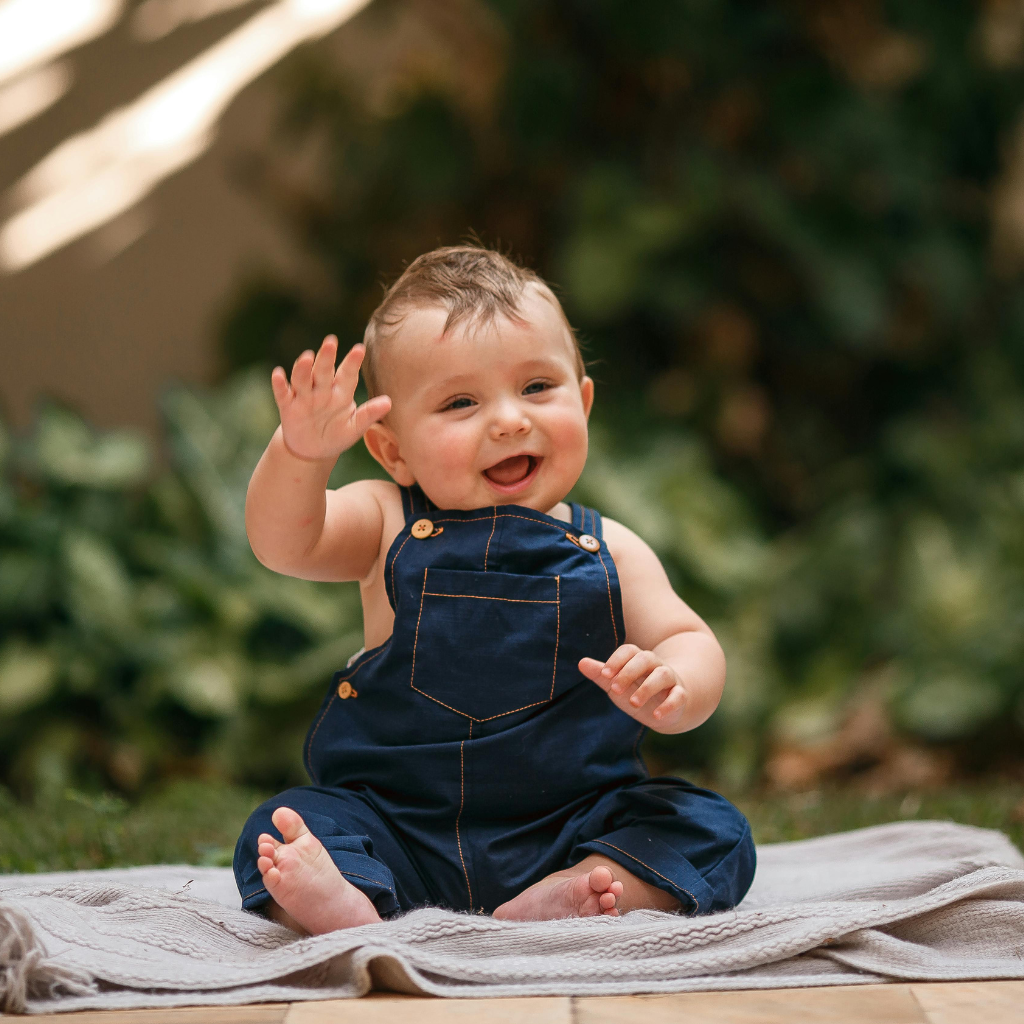
When Do Babies Start Waving Goodbye?
Few milestones feel quite as emotional as your baby waving goodbye for the first time. This simple gesture is actually a big developmental step because it combines social awareness, imitation, communication, and motor coordination.
Most babies begin waving between 9 and 12 months, although some may start earlier or later.
Why Waving Is a Meaningful Milestone
Waving is an early form of communication. Before babies can say words clearly, gestures help them connect with the people around them.
When your baby waves, they’re showing signs of:
- Social engagement
- Understanding routines
- Motor coordination
- Imitation skills
- Early language development
Babies usually learn gestures by watching caregivers repeat them during everyday interactions.
For a broader overview of first-year milestones, visit our Social Milestones by Month: 0–12 Months.
When Do Babies Usually Start Waving?
Many babies begin experimenting with waving around 9 months. More intentional waving often appears closer to 10 or 11 months.
Your baby may first:
- Lift an arm randomly
- Open and close their hand
- Copy waving motions without context
- Wave after seeing others do it repeatedly
Eventually, babies begin understanding that waving has social meaning.
Signs Your Baby Is Learning Gestures
You might notice your baby:
- Watching your hands closely
- Copying movements during songs or games
- Responding to greetings
- Smiling during social routines
- Using gestures alongside babbling
Waving often develops around the same time as pointing, clapping, and imitation.
How to Encourage Waving
Simple repetition during daily routines can help babies learn gestures naturally.
Wave During Transitions
Wave hello and goodbye consistently when:
- Leaving rooms
- Ending video calls
- Saying goodbye to family members
- Starting daycare routines
Pair Gestures With Words
Using gestures and language together helps babies connect movement with meaning.
For example:
- “Bye-bye!” while waving
- “Hi Grandma!” with a greeting gesture
Read Interactive Books
Books with familiar social routines often encourage imitation and participation.
Play Social Games
Peekaboo, nursery rhymes, and mirror play all support imitation skills.
Waving and Language Development
Gestures are closely connected to communication growth.
Research shows babies often use gestures before spoken words emerge. Waving, pointing, and reaching are early ways babies express themselves.
You may also notice your baby:
- Responding to their name
- Babbling with more variety
- Copying sounds
- Looking toward familiar people when named
Learn more in When Do Babies Respond to Their Name?.
When Parents Should Check In
There’s a wide range of typical development, especially with social milestones.
You may want to discuss development with your pediatrician if your baby:
- Shows little interest in social interaction by 12 months
- Rarely makes eye contact
- Does not use gestures like pointing or waving
- Is not babbling or responding to familiar voices
In many cases, babies simply develop skills on their own timeline.
Supporting Social Development Every Day
You don’t need structured lessons to encourage communication skills.
The most helpful support often comes through:
- Face-to-face interaction
- Daily routines
- Responsive conversation
- Songs and play
- Shared attention during activities
Your baby learns through connection, repetition, and everyday moments with you.
Track your baby's milestones and get personalized insights with the NurtureWell app.