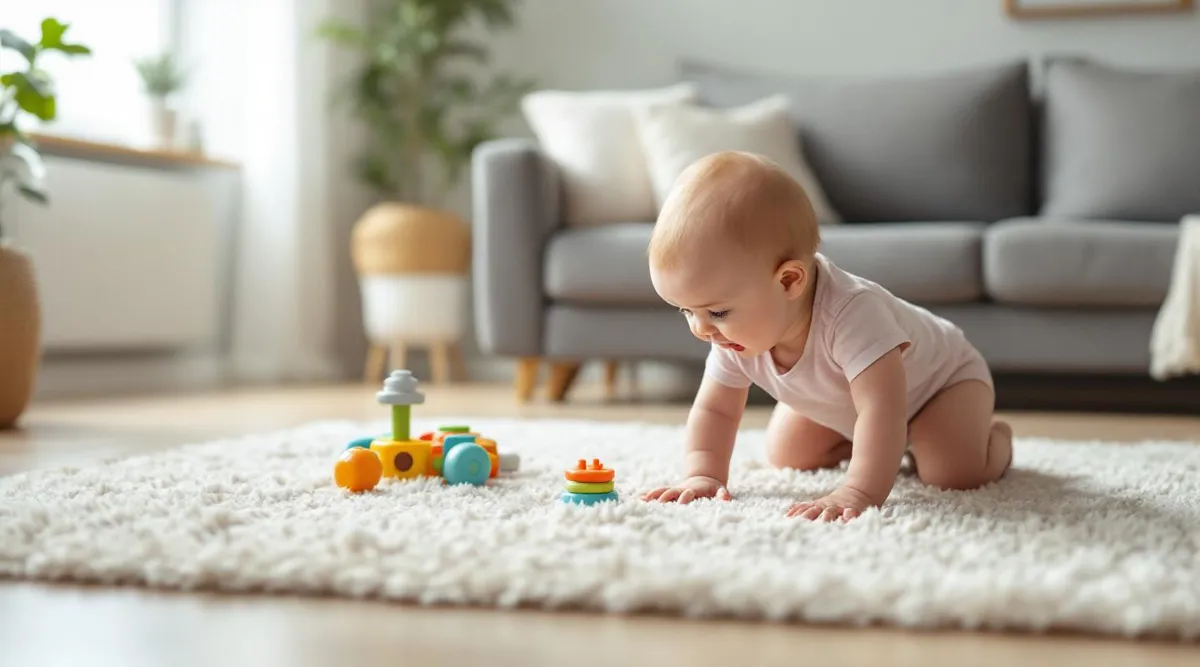
Crawling is one of the most exciting (and sometimes emotional!) milestones of your baby’s first year. One day they’re rolling… and the next, they’re suddenly mobile.
So when do babies start crawling? Most begin somewhere between 7 and 10 months — but some crawl earlier, some later, and some skip traditional crawling altogether.
Let’s break down what’s typical, what’s normal, and how you can support your baby along the way.
What Age Do Babies Start Crawling?

Here’s a general timeline many babies follow:
- 4–6 months: Rocking on hands and knees
- 6–8 months: Scooting, army crawling, or moving backward
- 7–10 months: Hands-and-knees crawling
- 9–12 months: Pulling to stand and cruising
Crawling depends on strong core, arm, and leg muscles — all built through rolling, tummy time, and sitting.
For a full overview of how crawling fits into the bigger picture, explore our baby milestones by month guide.
Early Signs Your Baby Is Getting Ready to Crawl
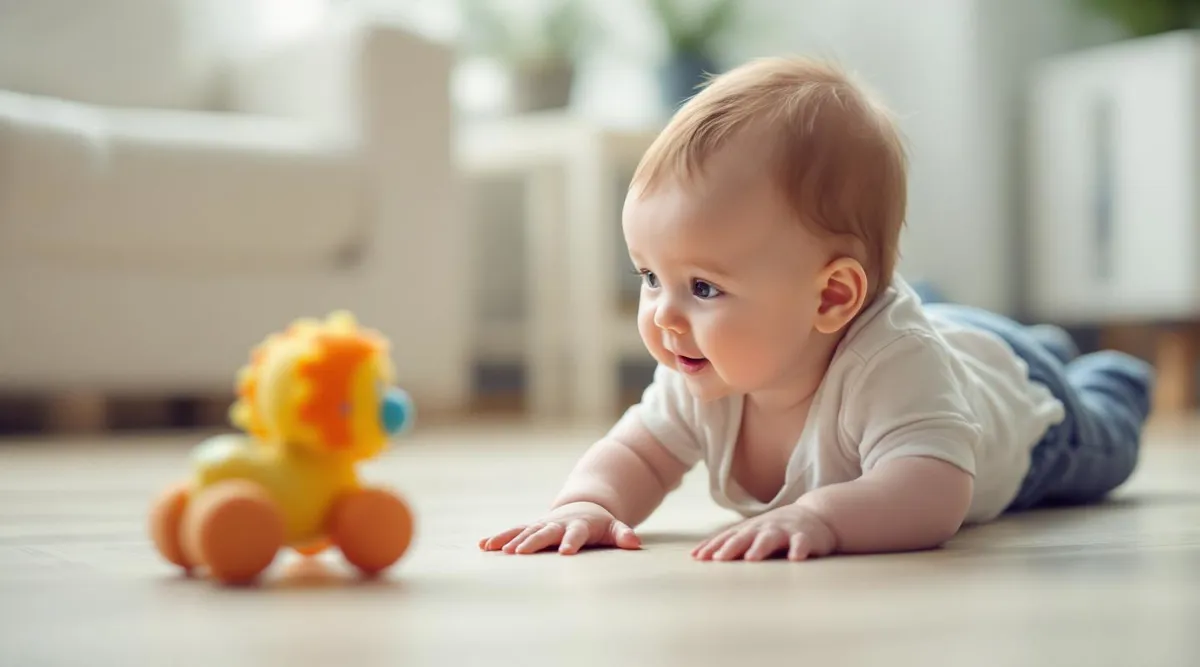
You may notice your baby:
- Pushing up high during tummy time
- Rocking back and forth on hands and knees
- Spinning in circles on their tummy
- Scooting backward before moving forward
- Reaching determinedly for toys just out of reach
Many babies actually move backward before they figure out how to go forward. It can be frustrating for them — but it’s completely normal.
Different Types of Crawling (All Normal!)

Not all babies crawl the same way. You might see:
- Army crawling: Pulling forward on the belly
- Bear crawling: Hands and feet on the floor with straight legs
- Scooting: Moving on the bottom
- Rolling as transportation: Yes, this counts!
Some babies skip crawling entirely and go straight to pulling up and walking. While crawling offers great coordination benefits, skipping it doesn’t automatically mean something is wrong.
How to Encourage Crawling Safely

The best encouragement is simple floor play.
1. Make Tummy Time Fun
Place toys slightly out of reach to motivate movement. Get down on the floor face-to-face with your baby — your smile is powerful motivation.
If tummy time has been a challenge, our guide on how much tummy time your baby really needs can help.
2. Create a Safe Exploration Space
Clear a soft area on the floor with enough room to move freely. Babies are more likely to practice when they feel safe and unrestricted.
3. Limit Time in Baby Gear
Extended time in swings, walkers, or seats can reduce opportunities to build the muscle strength needed for crawling.
Simple, consistent floor play really does the trick.
When Should I Talk to My Pediatrician?
Every baby develops at their own pace. But consider checking in if:
- Your baby isn’t attempting to move in any way by 10–11 months
- They use only one side of their body consistently
- They seem very stiff or very floppy
Often, babies are simply focusing on other skills — like babbling or pulling to stand. Trust your instincts. If you’re unsure, it’s always okay to ask.
What Comes After Crawling?
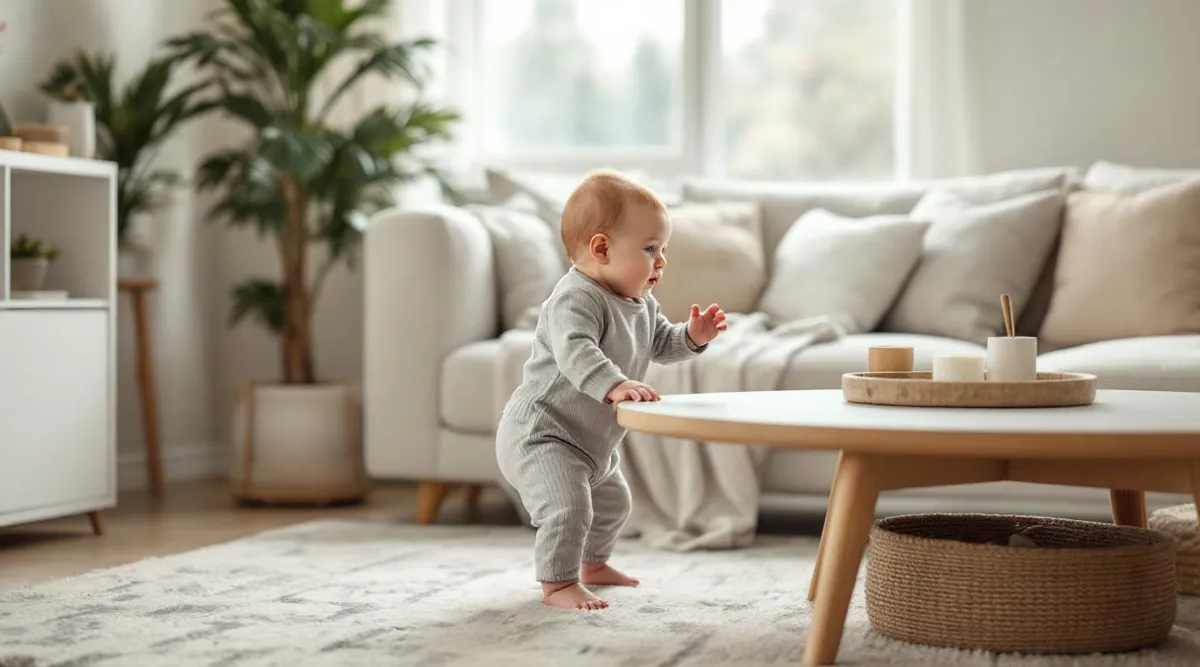
Once your baby masters crawling, you’ll likely see:
- Pulling to stand
- Cruising along furniture
- Letting go briefly
- First independent steps
Crawling opens up a whole new world of independence — and a whole new level of baby-proofing.
If you’d like to track crawling and other movement milestones in one place, the NurtureWell app makes it simple to log progress and get personalized, reassuring insights tailored to your baby.