If you’ve started hearing adorable little sounds like "ba-ba" or "da-da," you might be wondering: is this babbling? And when do babies actually start?
The short answer: most babies begin babbling between 4 and 6 months. But like every milestone in your baby’s first year, there’s a wide range of normal.
Let’s walk through what babbling really is, when it typically starts, and how you can gently support your baby’s growing communication skills.
What Is Babbling?
Babbling is when your baby begins combining consonant and vowel sounds, like:
- “ba-ba”
- “da-da”
- “ma-ma”
- “ga-ga”
Before babbling, your baby likely went through earlier communication stages:
- Cooing (around 2–3 months): Soft vowel sounds like “oooh” and “aaah.”
- Laughing (around 3–4 months): Social giggles and squeals.
- Vocal play (around 4 months): Experimenting with pitch, volume, and raspberries.
Babbling is different because it includes repeated syllables and starts to sound more like real speech patterns.
If you want to see how babbling fits into the bigger developmental picture, our Baby Milestones by Month guide walks through communication, motor, and social milestones from birth to 12 months.
When Do Babies Start Babbling?
Most babies begin true babbling between 4 and 6 months.
Here’s a general timeline:
- 0–3 months: Crying and cooing
- 4–6 months: Repetitive babbling (“ba-ba,” “da-da”)
- 7–9 months: Varied babbling (“ba-da-ga”)
- 9–12 months: Babbling that sounds like conversation, with tone changes
By around 6 months, many babies can:
- Respond to their name
- Turn toward familiar voices
- Make consonant sounds like “b,” “m,” or “d”
If your baby isn’t babbling right at 4 months, try not to panic. Some babies take a little longer, especially if they’re focusing hard on physical milestones like rolling or sitting.
What Babbling Means for Development

Babbling isn’t just cute — it’s a major brain workout.
When your baby babbles, they’re:
- Practicing how to move their lips, tongue, and jaw
- Learning how conversation “flows”
- Noticing how you respond to their sounds
- Building the foundation for first words
In fact, babbling is one of the clearest signs that your baby’s language and social development are on track.
The back-and-forth rhythm of babbling and your response teaches your baby that communication is a two-way street.
How to Encourage Babbling
The good news? You don’t need flashcards or special programs. Your everyday interactions are more than enough.
Here are simple ways to encourage babbling:
1. Talk Throughout the Day
Narrate what you’re doing:
- “Now we’re putting on your socks!”
- “Look at the dog!”
- “Time for your bath!”
Hearing language in context helps your baby connect sounds to meaning.
2. Imitate Your Baby’s Sounds
If your baby says “ba,” say “ba” right back.
This shows them:
- You’re listening
- Their sounds matter
- Communication gets a response
You might notice them light up and try again — that’s learning in action.
3. Read Simple Board Books
Even at 4–6 months, reading supports early language development.
Choose books with:
- Big pictures
- Repetitive phrases
- Rhyming patterns
Your baby may not understand the story yet, but they’re soaking in the rhythm of speech.
4. Get Face-to-Face
Babies learn by watching your mouth move. Try getting down at eye level during playtime and exaggerating sounds slightly.
Seeing how you form “m” or “b” helps them experiment with those same movements.
When Should I Be Concerned?

Every baby develops at their own pace, but it’s worth mentioning concerns to your pediatrician if by 6–7 months your baby:
- Isn’t making consonant sounds
- Doesn’t respond to sounds or their name
- Rarely makes vocal noises
- Seems not to notice voices
Most of the time, there’s a simple explanation — and early support, when needed, can make a big difference.
If you’re ever unsure, trust your instincts. You know your baby best.
What Comes After Babbling?
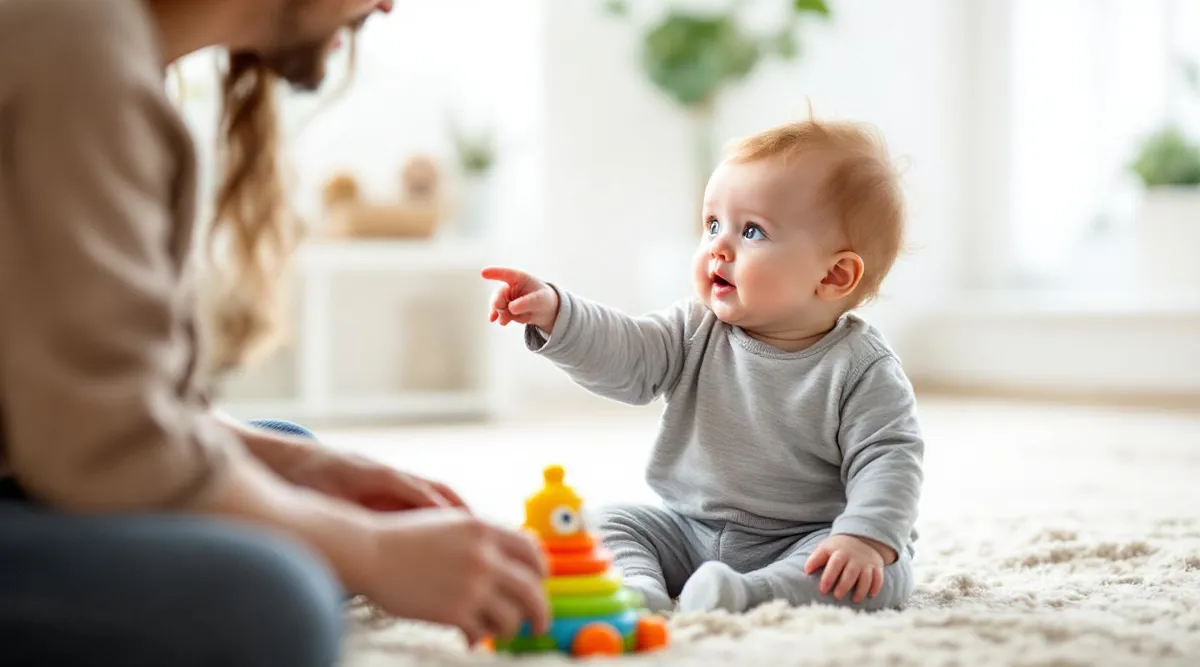
After babbling becomes more varied and expressive, the next big leap is usually first words, often between 9 and 12 months.
But remember: language development isn’t a straight line. Some babies focus on movement first (like crawling or pulling up), then pour energy into talking.
Development is beautifully interconnected.
Babbling is one of those milestones that feels small but means something big. It’s your baby’s first step into conversation — and you’re their favorite person to practice with.
If you’d like a simple way to track communication milestones alongside sleep, feeding, and motor skills, the NurtureWell app helps you see the full picture of your baby’s development in one place.