
Newborn Development Week by Week: 0–8 Weeks
The first two months with your baby can feel like a blur of feeding, diaper changes, and very little sleep. At the same time, your newborn is growing and changing at an incredible pace.
If you’re wondering what’s “normal” from week to week, you’re not alone. Here’s a gentle guide to what many babies do in their first 8 weeks — with plenty of reassurance that there’s a wide range of healthy development.
For a broader look at the full first year, you can also explore our Baby Milestones by Month: 0–12 Month Guide.
Week 1–2: Adjusting to the World

In the first couple of weeks, your baby is focused on basic survival and bonding.
You may notice:
- Strong reflexes (startle, rooting, grasping)
- Lots of sleep (14–17 hours a day, often in short stretches)
- Brief periods of alertness
- Recognition of your voice and smell
Your baby’s movements may seem jerky or uncoordinated — that’s completely normal. Their nervous system is still maturing.
This stage is less about “milestones” and more about connection. Skin-to-skin contact, feeding on demand, and simply responding to your baby’s cues are exactly what they need.
Week 3–4: More Alert Moments

Around the third or fourth week, many babies start having slightly longer alert periods.
You might see:
- More focused eye contact (especially at close range)
- Tracking a face or high-contrast object briefly
- Small cooing sounds
- Stronger head control during tummy time
Tummy time is especially important now. Even a few minutes at a time helps build neck and shoulder strength. If you’re unsure how much is enough, our article on how much tummy time your baby really needs breaks it down in simple terms.
Week 5–6: Early Social Smiles

This is when many parents notice one of the most heart-melting changes: the first real social smiles.
Around 6 weeks, your baby may:
- Smile in response to your face or voice
- Make more cooing and gurgling sounds
- Hold their head up a little longer during tummy time
- Become more expressive overall
If you’re eagerly watching for that first grin, remember that some babies smile a little earlier and some a little later. Both can be perfectly normal.
Week 7–8: Growing Strength and Awareness
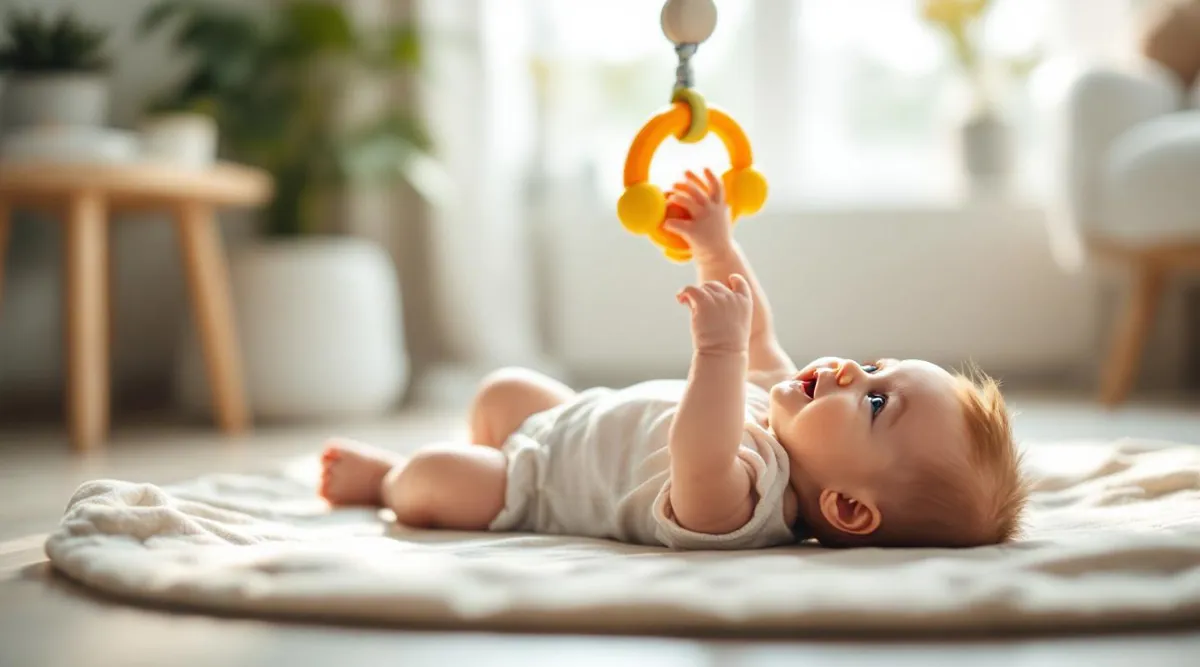
By the end of the second month, many babies are noticeably stronger and more engaged.
You may see:
- Smoother arm and leg movements
- Longer periods of alertness
- More consistent eye contact
- Early attempts to bat at toys
Your baby is beginning to understand that their actions have effects — a foundation for later motor and cognitive skills.
If you’re tracking development closely, this is a great time to start noticing patterns in sleep, feeding, and alert times. It can help you feel more grounded during a season that often feels unpredictable.
What If My Baby Isn’t Doing All of This?

It’s completely normal for babies to develop at slightly different speeds. Some are more vocal early on. Others focus more on movement. Some sleep more; others are more alert.
Consider checking in with your pediatrician if:
- Your baby rarely responds to sound
- There is no eye contact by 8 weeks
- They seem unusually floppy or stiff
Most of the time, small differences are just that — differences, not problems.
A Gentle Reminder for You

In these early weeks, it’s easy to wonder if you’re doing everything “right.” The truth is, showing up, feeding your baby, comforting them, and learning their cues is exactly what supports healthy development.
If you’d like a simple way to see how your baby’s growth fits into the bigger picture, you can track milestones and patterns with the NurtureWell app — and get personalized insights designed for the first year.