
Baby Milestones by Month: 0–12 Months
Watching your baby grow during the first year is incredible. One week they’re curling into your chest, and before you know it, they’re pulling up on the couch.
This month-by-month guide walks you through what many babies do from birth to 12 months. Remember: there’s a wide range of normal. Milestones are guides, not deadlines.
Tip: You can track your baby’s progress using an infant development tracker to spot patterns over time.
Newborn (0–1 Month)

In the first few weeks, your baby is adjusting to life outside the womb.
Common milestones:
- Lifts head briefly during tummy time
- Focuses on faces at close range
- Startles at loud sounds
- Moves arms and legs in jerky motions
This stage is all about bonding, feeding, and sleep.
2 Months

Around 2 months, babies become more alert and interactive.
You may notice:
- Social smiles
- Longer eye contact
- Cooing sounds
- Smoother arm and leg movements
Short, consistent tummy time sessions help build strength for later milestones.
3 Months

Your baby is gaining head control and becoming more expressive.
Common skills:
- Pushes up on forearms during tummy time
- Brings hands to mouth
- Follows moving objects with eyes
- Smiles responsively
4 Months
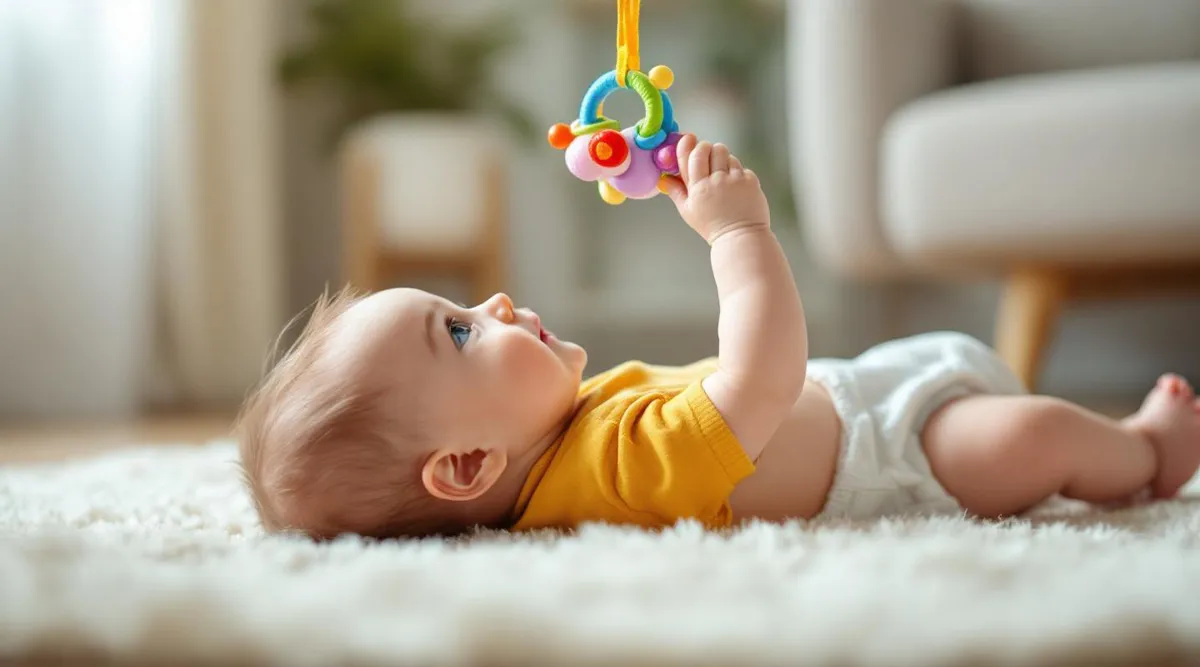
This is often a big month for physical growth.
Many babies:
- Hold head steady without support
- Roll from tummy to back
- Laugh and squeal
- Reach for toys
5 Months

Your baby is getting stronger and more coordinated.
You might see:
- Rolling both directions (or getting close)
- Pushing up on straight arms
- Exploring toys with hands and mouth
6 Months

Halfway through the first year!
Common milestones:
- Sits with support (and sometimes independently)
- Responds to their name
- Begins babbling ("ba," "da")
- Transfers objects between hands
7 Months

Mobility may start increasing.
Many babies:
- Sit independently
- Begin scooting or early crawling motions
- Show stronger emotional attachment to caregivers
8 Months
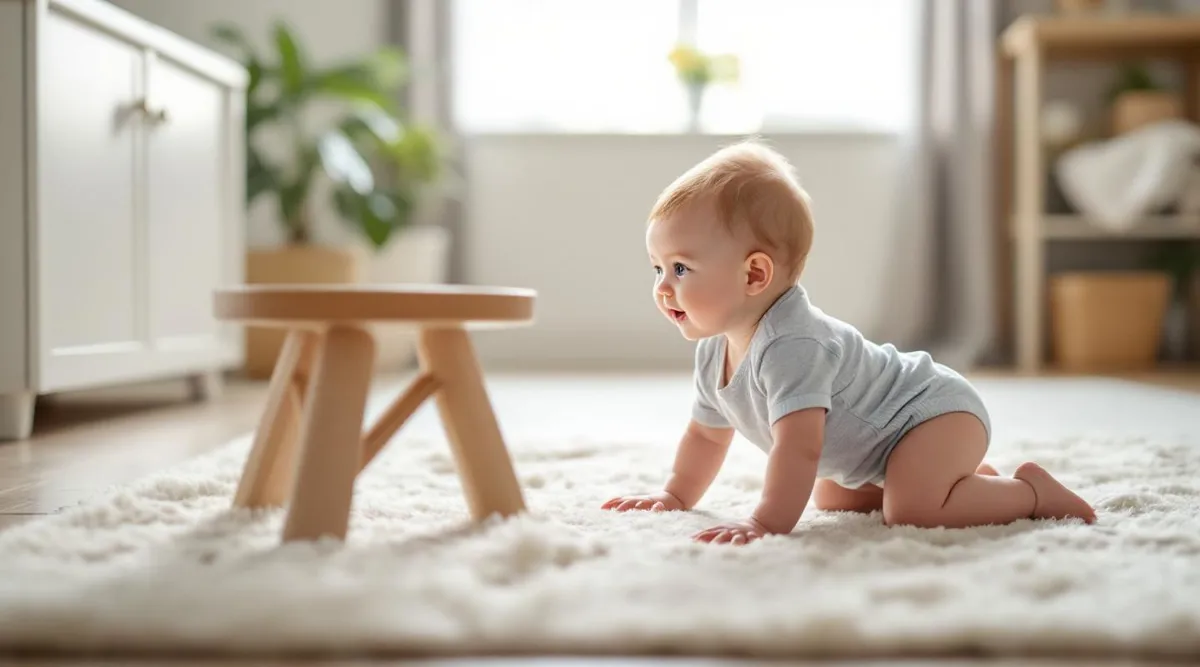
Your baby may be on the move.
Possible skills:
- Crawling
- Pulling to stand
- Using sounds to get attention
9 Months
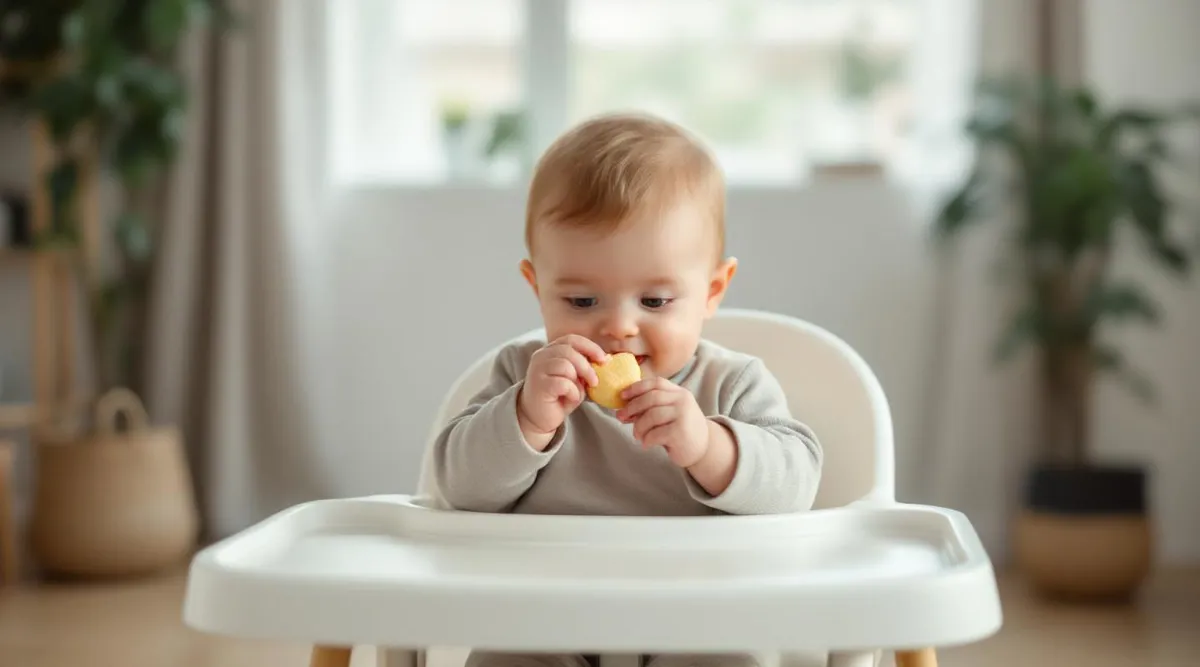
Curiosity is in full swing.
Common milestones:
- Cruising along furniture
- Pincer grasp (thumb and finger)
- Understanding "no"
10 Months

Problem-solving improves quickly.
You may see:
- More confident cruising
- Imitating sounds
- Exploring how objects work
11 Months

Independence grows.
Many babies:
- Stand briefly without support
- Say simple words like "mama" or "dada"
- Clap or wave
12 Months

Your baby is officially a toddler!
Common skills:
- First steps (for some babies)
- 1–3 clear words
- Following simple instructions
If your baby isn’t walking yet, that’s still very normal.
When to Talk to Your Pediatrician

Every baby develops at their own pace. Consider checking in if your baby:
- Isn’t smiling by 3 months
- Can’t sit with support by 9 months
- Isn’t babbling by 9 months
- Isn’t attempting to move (crawl, scoot, roll) by 12 months
Early support can make a big difference.
Frequently Asked Questions

Are milestone charts exact?
No. They reflect averages. Many healthy babies reach milestones earlier or later.
What if my baby skips crawling?
Some babies go straight to pulling up or walking. That can still be normal.
Should I compare my baby to others?
It’s natural, but try to focus on your baby’s individual growth pattern instead.
You don’t have to remember everything. Track your baby’s milestones and get personalized insights with the NurtureWell app.