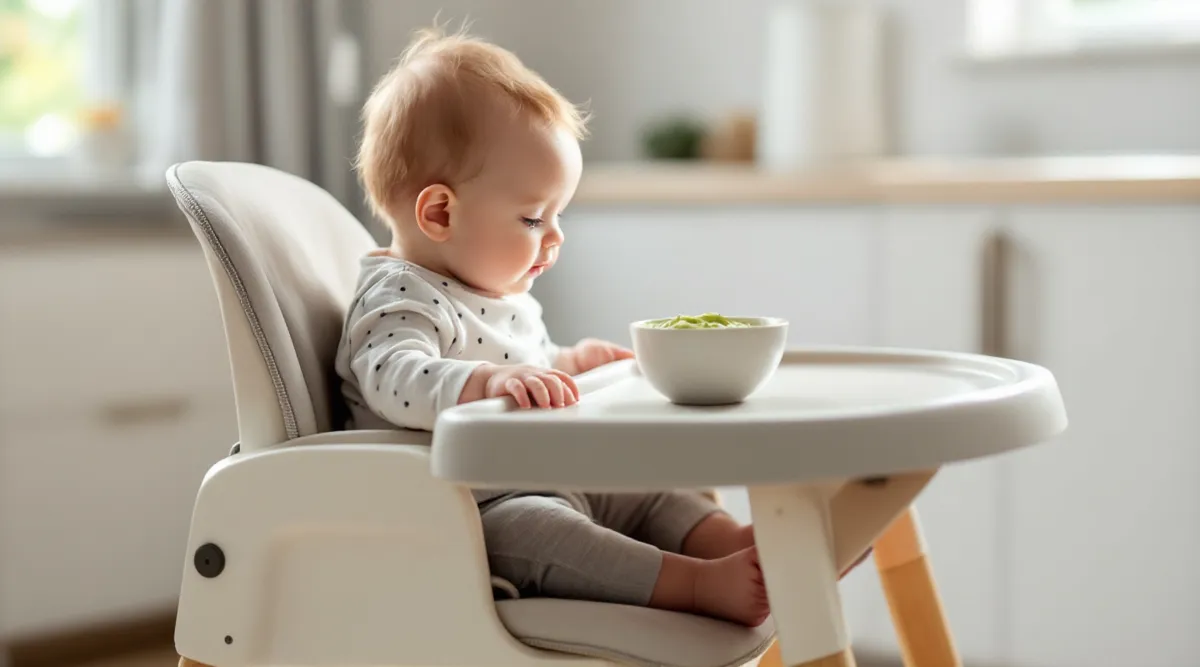
Introducing solids is an exciting milestone — and it’s completely normal to feel both eager and unsure. You might be wondering: Is my baby actually ready?
While many babies are ready for solids around 6 months, readiness isn’t just about age. It’s about development.
In this guide, you’ll learn the clear, research-backed signs that your baby is ready to start solids — and how to feel confident taking that next step.
Why 6 Months Is the Starting Point

Major health organizations recommend starting solids around 6 months. By this age, most babies:
- Have better head and neck control
- Can sit with minimal support
- Have lost the tongue-thrust reflex (which pushes food out)
- Need additional nutrients like iron
Before 6 months, your baby’s digestive system and motor skills usually aren’t quite ready. After 6 months, milk (breast milk or formula) is still the main source of nutrition — solids are a complement, not a replacement.
For a full breakdown of feeding amounts by age, see our guide to the baby feeding schedule by age.
6 Clear Signs Your Baby Is Ready for Solids

Here’s what to look for. Most babies show all or most of these signs when they’re ready.
1. Sits Upright With Minimal Support
Your baby doesn’t need to sit perfectly independently — but they should be able to sit upright with support and hold their head steady.
Good posture helps them:
- Swallow safely
- Coordinate chewing motions
- Reduce choking risk
If your baby still slumps forward or sideways frequently, it may be worth waiting a little longer.
2. Has Strong Head and Neck Control
Your baby should be able to hold their head steady without wobbling. This is essential for safe swallowing.
Head control usually develops through plenty of floor play and tummy time. If you’re unsure about your baby’s motor readiness, our tummy time tips guide can help strengthen those foundational muscles.
3. Loss of the Tongue-Thrust Reflex
You may notice that when you place something in your baby’s mouth, they don’t automatically push it out with their tongue.
You can test this gently with a clean spoon. If food keeps getting pushed right back out, your baby may not be ready yet.
4. Shows Interest in Food
A baby who watches you eat, reaches for your plate, or opens their mouth when food approaches is showing curiosity — and that’s a great sign.
Interest alone isn’t enough (some 4-month-olds are curious!), but combined with motor readiness, it’s meaningful.
5. Can Move Food to the Back of the Mouth
Early eaters don’t chew the way older children do, but they should be able to move purees or soft foods from the front of their mouth to the back for swallowing.
This skill builds gradually, and gagging can be part of the learning process. Gagging is different from choking — it’s noisy and common as babies learn.
6. Has Doubled Birth Weight (General Guideline)
Many babies are around double their birth weight by 6 months. This isn’t a strict rule, but it’s often used as a general readiness marker.
If your baby was premature or has unique medical needs, your pediatrician may suggest a slightly different timeline.
Signs Your Baby Is NOT Ready Yet

It’s just as helpful to know when to wait. Your baby may not be ready if they:
- Can’t hold their head up steadily
- Still automatically push food out with their tongue
- Can’t sit upright even with support
- Show no interest in food at all
If you’re feeling pressure from family or social media to start early, remember: there’s no prize for starting solids first.
Breast Milk or Formula Still Comes First

Even after starting solids, breast milk or formula remains your baby’s primary source of nutrition until 12 months.
Think of solids at 6 months as:
- Skill-building
- Sensory exploration
- Iron support
- Mealtime routine practice
Milk feeds should still be offered first in the early weeks of starting solids. Over time, solids gradually increase.
For a month-by-month breakdown, visit our complete baby feeding schedule by age.
How to Start Solids With Confidence
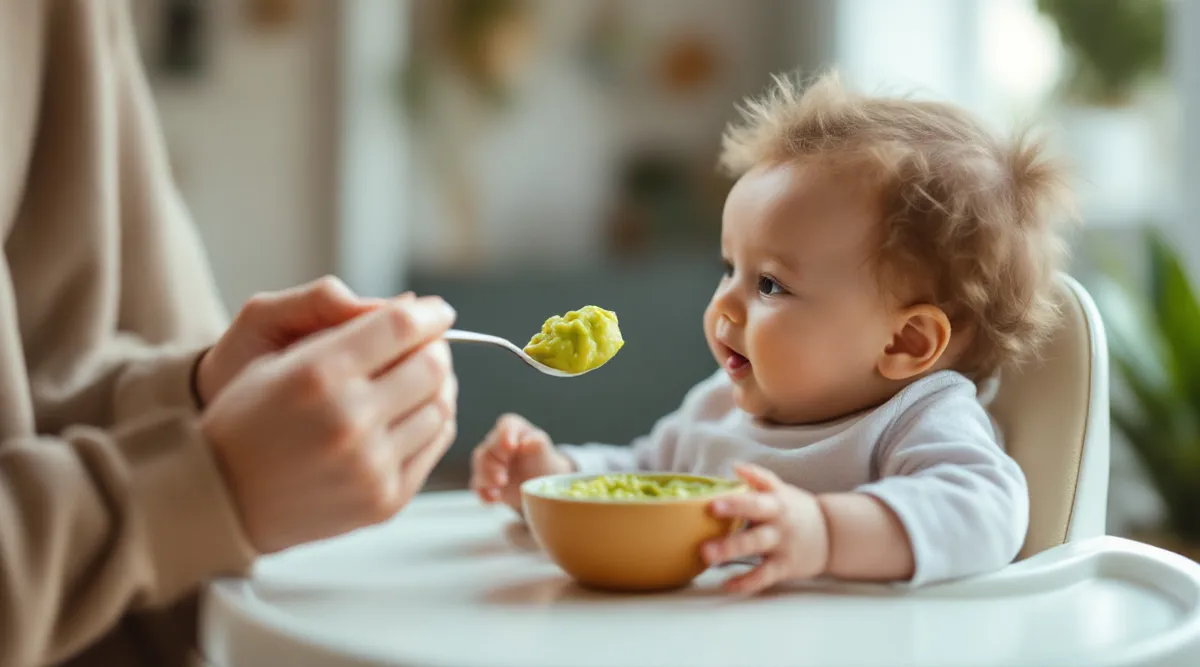
Once your baby shows clear readiness signs:
- Choose a calm time of day.
- Start with iron-rich foods (like iron-fortified cereal, lentils, or pureed meats).
- Offer small amounts — 1–2 teaspoons is plenty at first.
- Watch your baby’s cues.
Some babies take to food immediately. Others need repeated exposure. Both are normal.
And remember: this stage is about learning, not volume.
Starting solids is a big milestone — but it’s just one piece of your baby’s development. If you’d like help tracking feeding progress alongside motor, social, and language milestones, the NurtureWell app makes it simple and reassuring.
You’re doing great. One small bite at a time.